


I feel like a kid around the holidays waiting for Hannukah or Christmas, when the presents will soon arrive. My new article in the Journal of Alzheimer’s Disease Reports has been accepted and is in production. The journal told me to be patient for the next week to ten days while they are processing it. That is like telling your 6 year-old to keep staring at the presents under the tree but don’t open them yet! My Buddhist training in the 6 paramitas, especially patience, is being tested. Truthfully, I’m failing. I can’t express to you adequately the excitement of what I have discovered and the implications of this upcoming article, because I have done something in medicine that has never been done before. I didn’t realize it until I did a thorough literature review of how the medical community views dementia research. So please wait patiently with me while this gift should arrive in the next 7-10 days. For those in the Lyme community trying to figure out how we finally shift the healthcare dialogue and give spirochetal infections the importance they deserve in chronic disease management, where we more effectively shift the dialogue of whether Lyme is a chronic persistent infection or not...and how it affects a broad range of diseases…I’m thinking this upcoming published research may be the opening we have all been waiting for. Especially because what I found in Lyme disease significantly affects dementia research. Dementia is a big problem. In studies funded by the National Institutes of Health (NIH) researchers found that 42% of Americans over the age of 55 will eventually develop dementia during their lifetime, rather than currently living with the risk or active disease.

Now, I don’t know about you, but a 42% chance of becoming demented as I age is not exactly my definition of how I would like to spend my ‘golden years’ but rather seems to be an inexorable decline into the ‘olden years.’ It is not the ideal culmination of a lifetime many expect after working hard for decades to achieve their version of the American dream. This new published research in the Journal of Alzheimer’s Studies should stimulate a new dialogue and future research into Lyme spirochetes and their role in another epidemic disease, Alzheimer’s disease (AD). I hope that will finally move the needle in a way we have not been able to previously because AD is a growing problem and is on everyone’s mind (literally) as they get older.
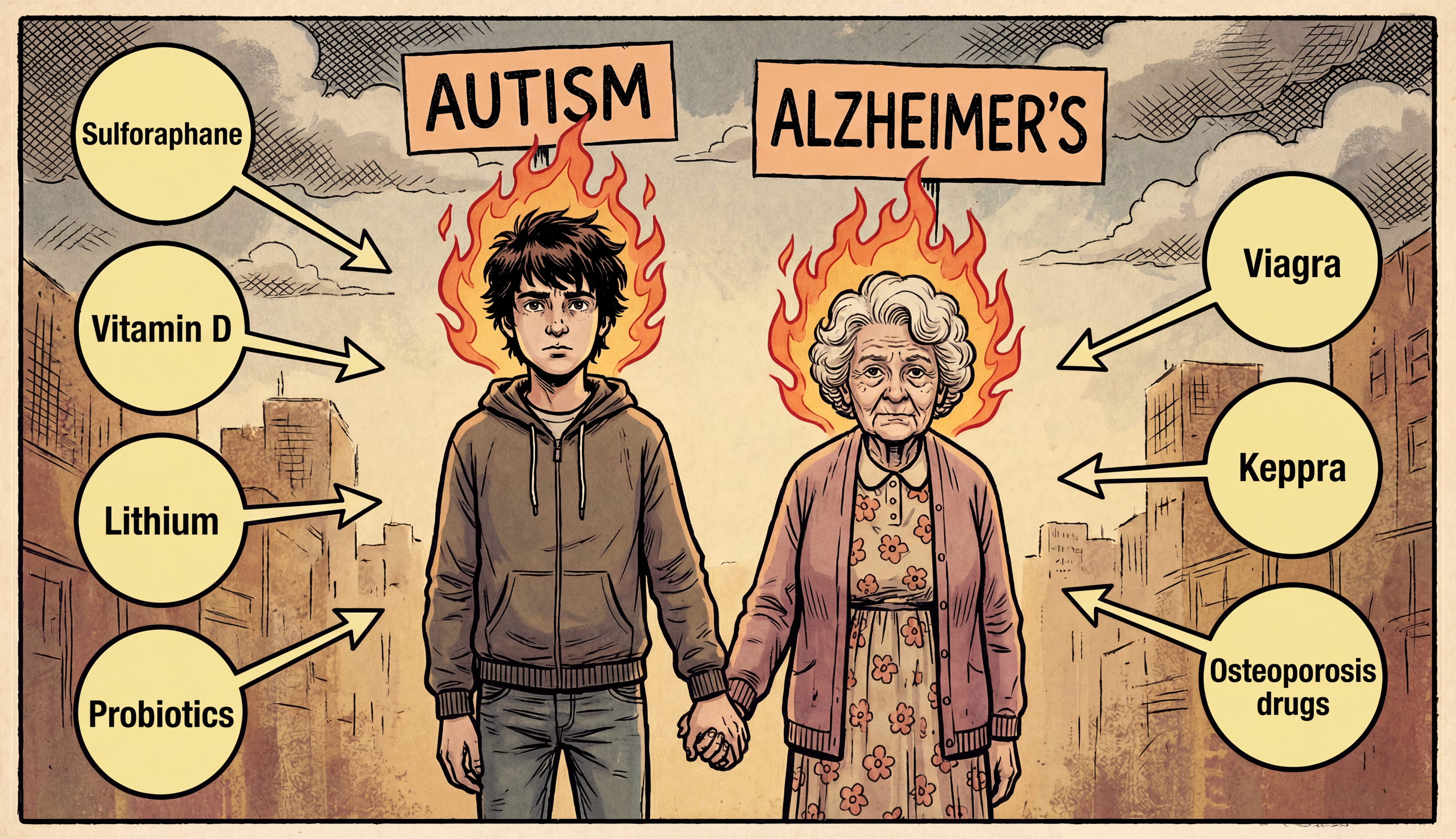
In the meantime, let me cover some updated news in dementia research. Almost daily, I am receiving medical news alerts about how this medicine or nutritional supplement or vaccine (Shingles, i.e., Shingrix) has been repurposed to prevent dementia. Then there was an article in the Washington Post last week about the surprising link between autism and Alzheimer’s disease. Hmmm…that is quite a coincidence. It is covered in my new book from Simon and Schuster, Ending Chronic Disease which will be out in October of this year, where I illustrate how all 16 MSIDS factors are associated in both illnesses, where inflammation underlies the pathogenesis of the diseases.
https://cangetbetter.com/ending-chronic-illness/
Here is the article gifted from my wife’s WP subscription:
Surprising links between autism, Alzheimer’s could change how we treat both


Here is that paper:

The Washington Post article continues:

So What Is The Potential Connection between Autism and Alzheimer’s? Brain Inflammation and Genetics

That paper found almost half of the genes predisposing to autism and two-fifths of the genes predisposing to Alzheimer’s disease are directly related to the mTOR signaling pathway.
What is mTOR?
The mTOR (mechanistic Target of rapamycin) pathway is an essential cellular signaling cascade that integrates diverse environmental and intracellular signals, including nutrients, growth factors, energy status, and oxygen levels to regulate cell growth, metabolism, protein synthesis and autophagy. Autophagy is the body’s natural cellular recycling system. It breaks down and removes old, damaged, or dysfunctional cell parts and turns them into energy or new, healthy components. It acts like a cellular “reset button” or cleaning crew, essential for survival, cell repair, and adaptation to stress.
mTOR Dysregulation Is A Shared Mechanism in Both Autism and Alzheimer’s Disease
mTOR dysregulation is a convergent pathogenic mechanism despite these conditions affecting different life stages and presenting distinct clinical features. The pathways dysregulation disrupts critical neuronal processes including synaptic function, protein homeostasis and autophagy in both diseases. In autism this leads to abnormal brain connectivity patterns and increased brain volume, as macrocephaly is commonly observed in individuals with autism. In Alzheimer’s disease, mTOR hyper activation occurs early in the disease progression, and contributes to amyloid beta production, while suppressing autophagy, the cellular process responsible for clearing toxic protein aggregates. This reduces clearance of amyloid beta plaques and increases hyperphosphorylated tau, creating a vicious cycle where protein aggregates accumulate while clearance mechanisms are impaired.
Therapeutic Implications:
The shared involvement of mTOR dysregulation has generated interest in mTOR inhibitors like rapamycin as potential treatments for both conditions. In autism models, mTOR inhibition completely rescues behavioral deficits and normalizes brain connectivity. See the article below published in Nature Communications back in 2021:

In Alzheimer’s disease, rapamycin and related compounds show promise in preclinical studies by enhancing autophagy and reducing pathological protein accumulation, although the clinical translation faces challenges including blood-brain barrier penetration.

Sulforaphane Modulates mTOR and Enhances Intracellular ATP Production
Many of you following me over the years know that I am a big proponent of taking broccoli seed extract, i.e. sulforaphane glucosinolate, on a daily basis. It is a well-characterized modulator of the mTOR pathway and enhances intracellular ATP production.
Sulforaphane Inhibits mTOR signaling in a concentration and time-dependent matter through the Nrf2 pathway. As a reminder, the Nrf2 pathway is a key player in stimulating anti-oxidant genes that exert not only anti-oxidant functions, helping to deal with inflammation, but also supports detoxification while helping suppress the p53 cancer gene. Sulforaphane also restores autophagy, the cellular clearance mechanisms suppressed by mTOR hyperactivation, thereby boosting autophagic clearance of damaged cellular organelles. Given that mTOR hyper activation is a shared pathogenic feature in both autism and Alzheimer’s disease, sulforaphane’s ability to inhibit mTOR and restore autophagy is relevant to both conditions. That is why it is one of the major nutritional supplements I have recommended to my patients over the years.
How Important is Sulforaphane in Autism?
Multiple randomized controlled trials have evaluated sulforaphane in autism spectrum disorder (ASD). The landmark trial by Singh et al. (2014) showed a 34% improvement in behavior and 70% improvement on the social responsiveness scale in young men with moderate to severe ASD receiving sulforaphane (50 – 150 µmol/day for 18 weeks) with improvements reversing upon discontinuation.
Is There Proof That Sulforaphane Can Help in Alzheimer’s Disease?
Yes, sulforaphane shows substantial preclinical evidence for improving Alzheimer’s disease pathology, which involves both mTOR dependent and mTOR independent autophagy activation. Multiple studies demonstrate that sulforaphane directly reduces both amyloid beta and tau accumulation in AD models, primarily in animal models. Recent research shows that sulforaphane improves cognitive functioning by restoring synaptic plasticity. While mTOR modulation is important, sulforaphane also can benefit AD through Nrf2 activation (reducing oxidative stress, which decreases amyloid beta and tau hyperphosphorylation), reducing NLRP3 inflammasome activation, and enhancing mitochondrial production of ATP. Keep in mind, while preclinical evidence is robust, human clinical trials specifically for AD are lacking.
The version of sulforaphane that I personally take is from NuMedica, BrocColinate Activated, which contains 120 mg in two capsules. All of our supplements are significantly discounted, and you can read more about it on our website. Look under Level 1 Basic Nutritional Support: https://cangetbetter.com/nutritional/
Other Nutritional Supplements That Potentially Affect Alzheimer’s Disease
The two other supplements/nutraceuticals that have recently made the news for brain health are probiotics and Vitamin D. Then there was a discovery that Lithium (low dose) may be of benefit.
Probiotics May Help Protect Brain Health As We Age
A scientific review article investigated whether influencing the makeup of the gut microbiome can improve brain health, and focused on probiotics, prebiotics, dietary changes, and fecal microbiota transplants (FMT). The authors concluded that modulating the gut microbiome may slow cognitive decline and improve brain health, via reducing inflammation in the brain, altering neurotransmitter signaling and by increasing levels of certain microbial metabolites. The gut-brain axis directly influences brain health and having bacteria that produce short-chain fatty acids (SCFAs) helps to reduce inflammation. The dietary interventions covered in this review for brain health included the Mediterranean diet, keto diet, and omega-3s and methyl donor supplements (B12, folate, choline) which support gene expression and energy production. These dietary interventions have the potential to stabilize neurotransmitter networks.

I discussed the role of the gut microbiome in health a five-part Substack, which you can see below:


Vitamin D and Brain Health
The article below was embargoed until April 1st. This is from the press release:
“Having higher levels of vitamin D in the blood in middle age is associated with lower levels of tau protein in the brain, which is a sign of dementia, years later, according to a study published April 1, 2026, in Neurology® Open Access, an official journal of the American Academy of Neurology. The study does not prove that vitamin D levels lower the level of tau and the risk of dementia; it only shows an association.
“These results suggests that higher vitamin D levels in midlife may offer protection against developing these tau deposits in the brain and that low vitamin D levels could potentially be a risk factor that could be modified and treated to reduce the risk of dementia,” said study author Martin David Mulligan, MB BCh BAO, of the University of Galway in Ireland. “Of course, these results need to be further tested with additional studies.”

We have been advising Vit D supplementation in our patients for years, following levels. I take K2D3, i.e., K Force from Orthomolecular, one a day. It contains 5000 IU of Vit D. As per prior studies, one of the effects of vitamin D is to help lower inflammation. Those with the highest levels of Vit D did the best when they got Covid, reducing the incidence of Long Covid. How does it work? Vitamin D acts as a crucial immunomodulator, reducing inflammation (lowers IL-6, IL-17, TNF-alpha) while strengthening innate/adaptive immunity against SARS-CoV-2. It helps prevent acute COVID-19 severity by regulating the Renin-Angiotensin System (RAS) to reduce cytokine storms, while low levels are associated with increased risk of long COVID symptoms.
Repurposed Medications for Brain Health: Low Dose Lithium
Lithium deficiency is a known factor affecting brain health. A recent JAMA study showed that low dose lithium can improve cognitive function. Among 80 participants, those who received a daily low-dose lithium carbonate showed a slower rate of decline in verbal memory, the ability to remember and recall words and sentences, compared to those who were on a placebo. This is from a recent JAMA study listed below:
“A 2015 systematic review and meta-analysis of the 3 randomized clinical trials (RCTs) available at that time, aggregating 232 participants with AD and mild cognitive impairment (MCI), found that lithium significantly decreased cognitive decline compared with placebo. While not all studies have shown that lithium is neuroprotective, the evidence suggests that lithium deficiency may represent a modifiable risk factor for AD. Participants who entered the RCT received either a 150-mg or 300-mg dose of lithium carbonate or placebo in identical over-encapsulated pills. Among prior RCTs of lithium in older adults with MCI and AD, results have varied based on treatment duration. Shorter-term trials (10-12 weeks) generally found no cognitive benefit, while longer-term trials (15-24 months), including ours, found effects on specific cognitive measures. These findings suggest that to detect cognitive effects in MCI, clinical trials need to be much longer than 10 to 12 weeks to observe a change in a declining trajectory.”

I specifically want to highlight that in these clinical trials, patients needed to be on the drug for up to 2 years to see results, and that 10-12 weeks was insufficient to see a change in cognition (or biomarkers). Stay tuned for my published article in the Journal of Alzheimer’s Disease Reports!
Viagra For Brain Health?
A recently released research paper adds to a growing body of literature exploring potential new uses of phosphodiesterase 5 inhibitors (PDE5i) which includes medications like sildenafil (Viagra). In 2024, Oxford University researchers found that sildenafil improves blood flow to the brain and improves endothelial function of blood vessels in the brain in patients with an increased risk of vascular dementia.
In a press release, associate professor Alastair Webb MD, lead author of the study said: “This is the first trial to show that sildenafil gets into the blood vessels in the brain in people with this condition, improving blood flow and how responsive these blood vessels are. These two key factors are associated with chronic damage to the small blood vessels in the brain, which is the commonest cause of vascular dementia. This demonstrates the potential of this well-tolerated, widely-available drug to prevent dementia, which needs testing in larger trials.”

Levetiracetam, An Anti-Seizure Drug, Prevents Amyloid Beta Production
The third repurposed drug is Keppra. I have used Levetiracetam (Keppra) on occasion in my seizure patients, and also in some with Multiple Chemical Sensitivity, where it has been published in some cases to be of benefit. There has been research into levetiracetam and its potential to improve mild cognitive impairment (MCI) and AD where the drug seems to improve cognitive function in people with MCI and Alzheimer’s. However, it would need to be taken at a very early stage in the illness, before major symptoms arise by affecting amyloid precursor protein (APP) to be of benefit.

Fourth Repurposing of Meds: Anti-Osteoporosis Drugs, i.e., Bisphosphonates for AD?
For those individuals who have been hesitant to consider bisphosphonates for osteoporosis due to the potential side effects, this article may have you change your mind. Researchers conducted a large-scale study using Hong Kong’s city-wide electronic medical records, involving more than 120,000 patients aged 60 and above with osteoporosis or fragility fractures between 2005 and 2020. The team found that those who used medicines like alendronate and zoledronate had a 16% lower risk of developing Alzheimer’s disease and related dementias (ADRD) compared to untreated patients, and a 24% lower risk compared to those who received other osteoporosis medications. The association was especially pronounced in women and patients with hip fractures.
You can read the full article here:

Due to the rising rates of Alzheimer’s disease where the prevalence of AD in the US is expected to double by 2060 (from 6.7 to 13.8 million people), whereas of 2021, over 57 million people worldwide were living with all-cause dementia (60-70% is AD) there is an urgent need to find a solution. Repurposing medication and new solutions is a top priority.
Final Thoughts
We are living in a world where infections and toxins mixed with genetics are affecting our future risk of dementia. In the next Medical Detective Substack, I will be sharing with you my recent article accepted into the Journal of Alzheimer’s Disease Studies on reversing Alzheimer’s biomarkers using a short-term oral antibiotic therapy and the role of the 16-point MSIDS model in Alzheimer’s disease. This is brand new information that has never been published before. In case the article does not make it through production one week from today, stay tuned. Once it is live, I will send out the next Substack.
In the meantime, please see the talk that I did with Dr Christine Burke from the Alzheimer’s Summit regarding this groundbreaking research. April 15th is the last day for this free Summit. For attending, please download the free E-book, The Brain Regeneration Guide:
https://drtalks.com/summits/alzheimers/brain-regeneration-guide?uid=943&oid=111&ref=3029